Web Audits
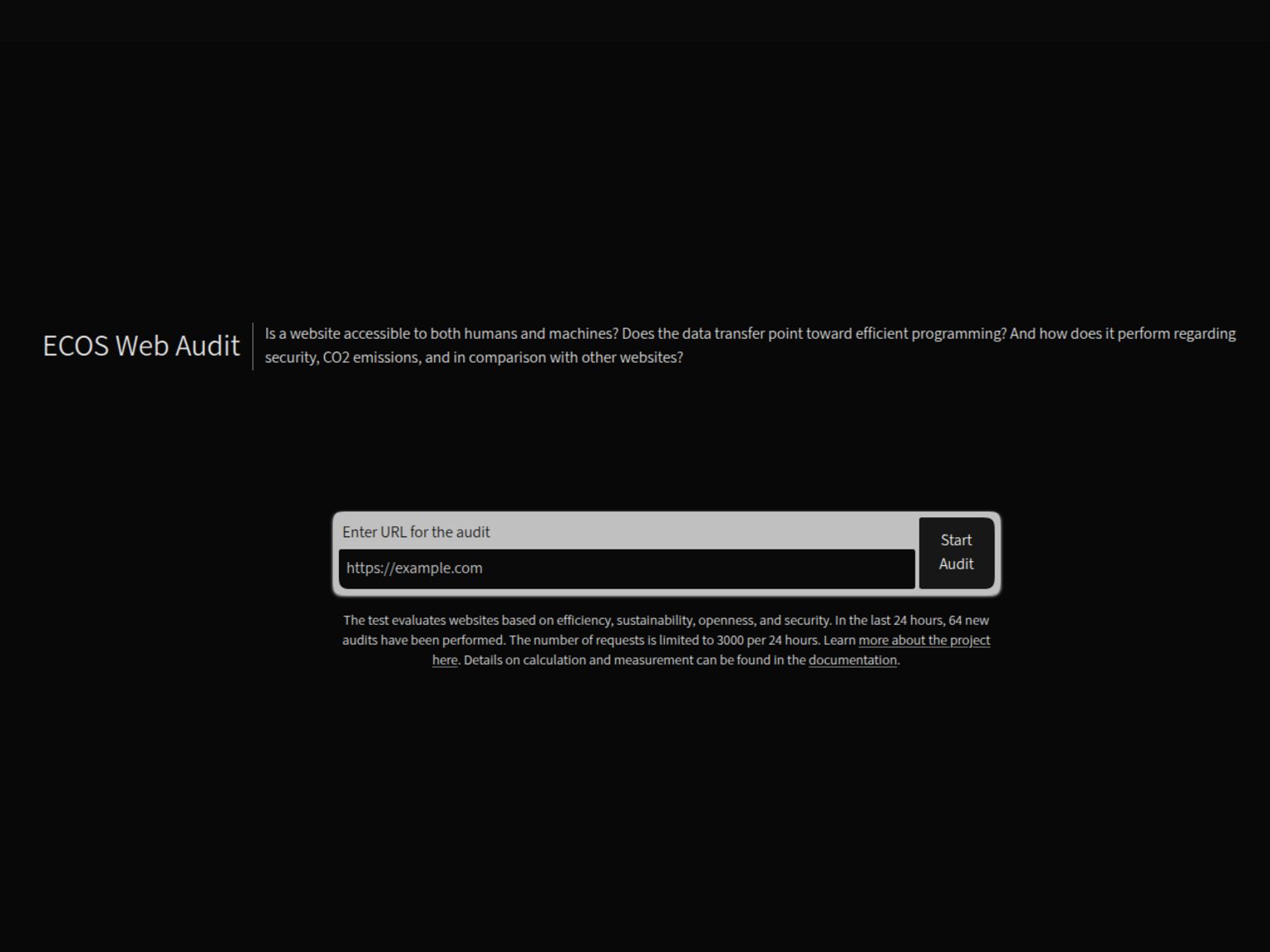
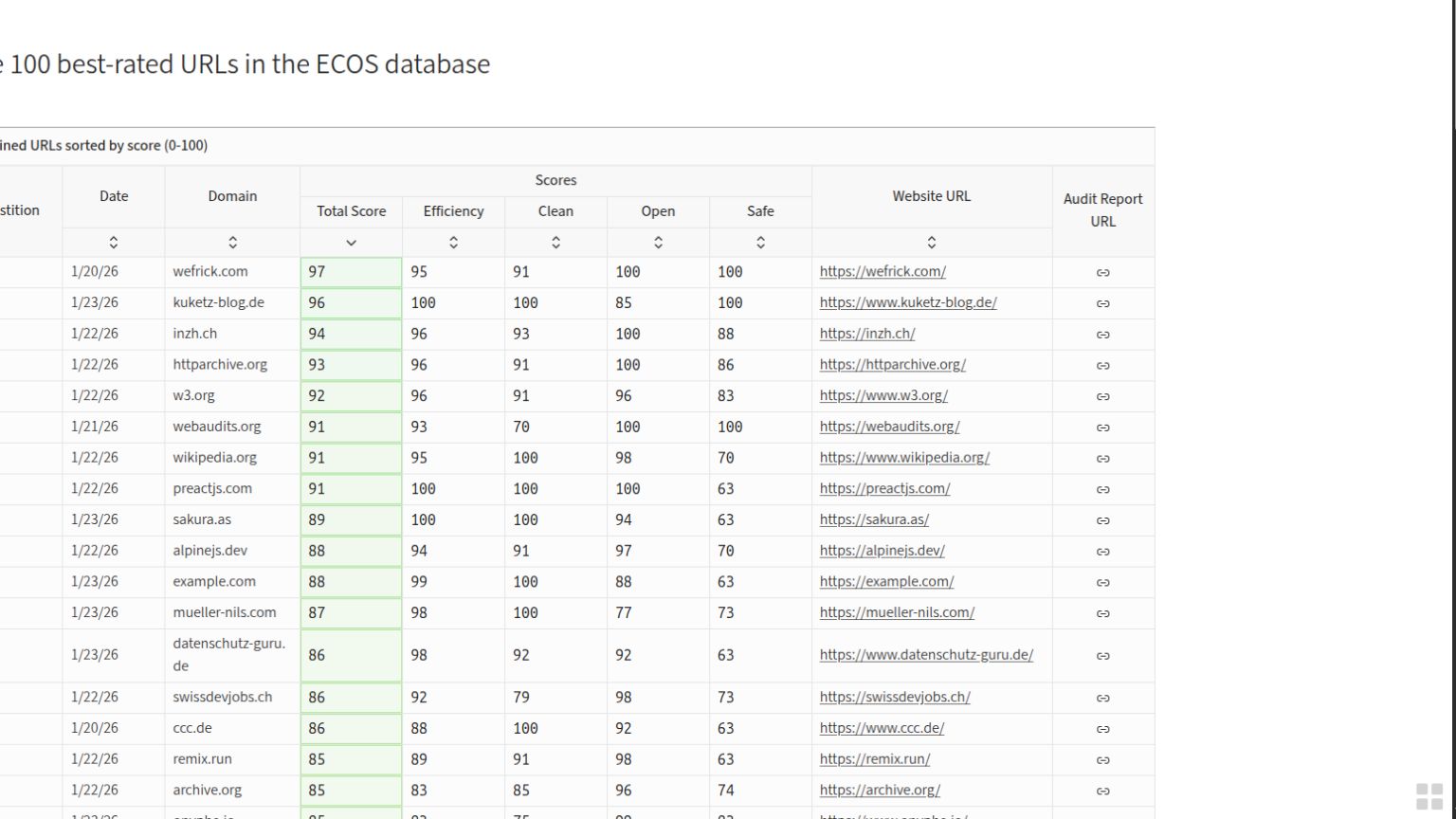
Web Audits is an open-source and open-data platform for automated technical analysis of websites. URLs are evaluated based on objective, measurable criteria, and the results are made publicly available as open data for benchmarking purposes.
ECOS Analysis Framework
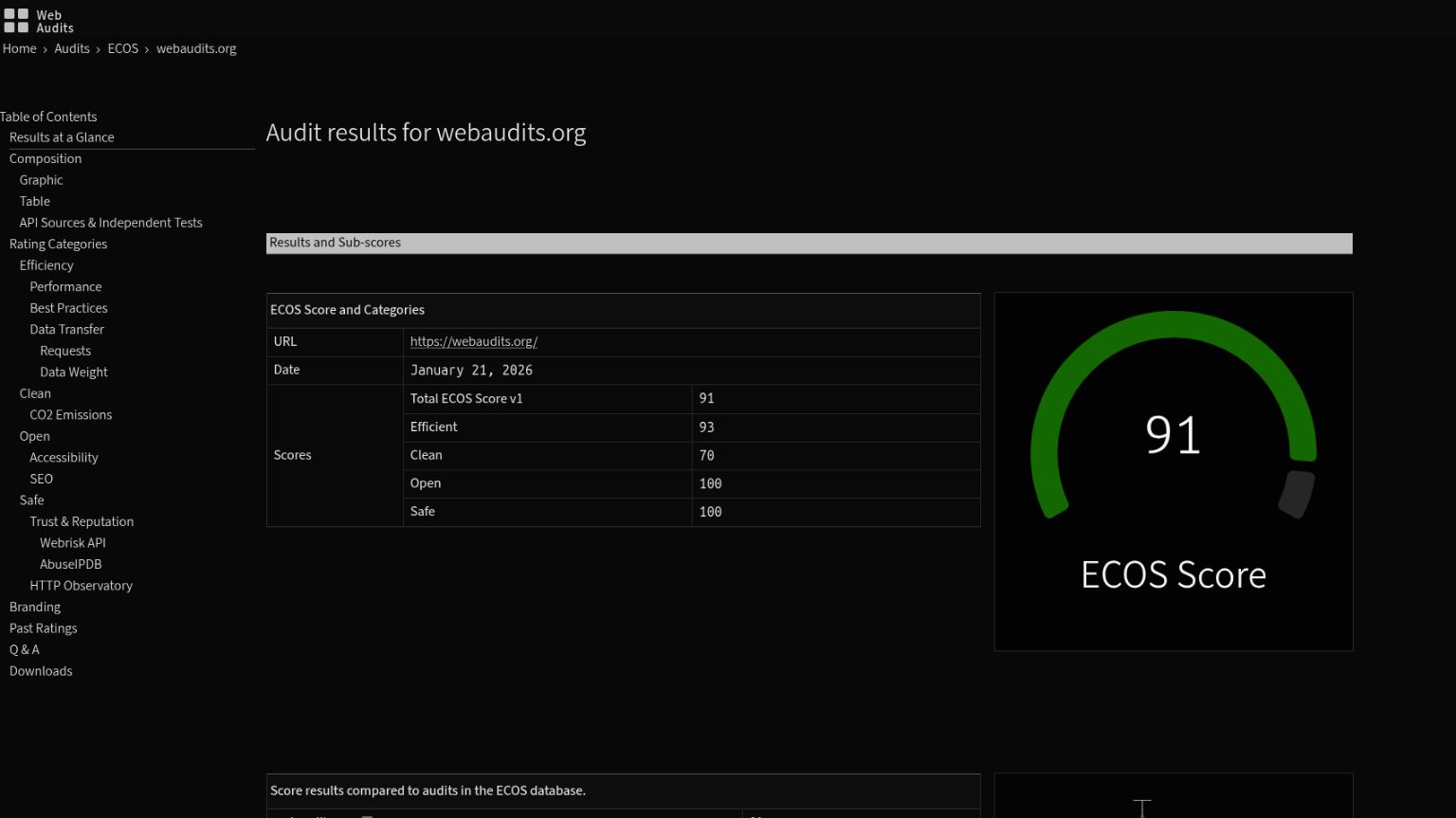
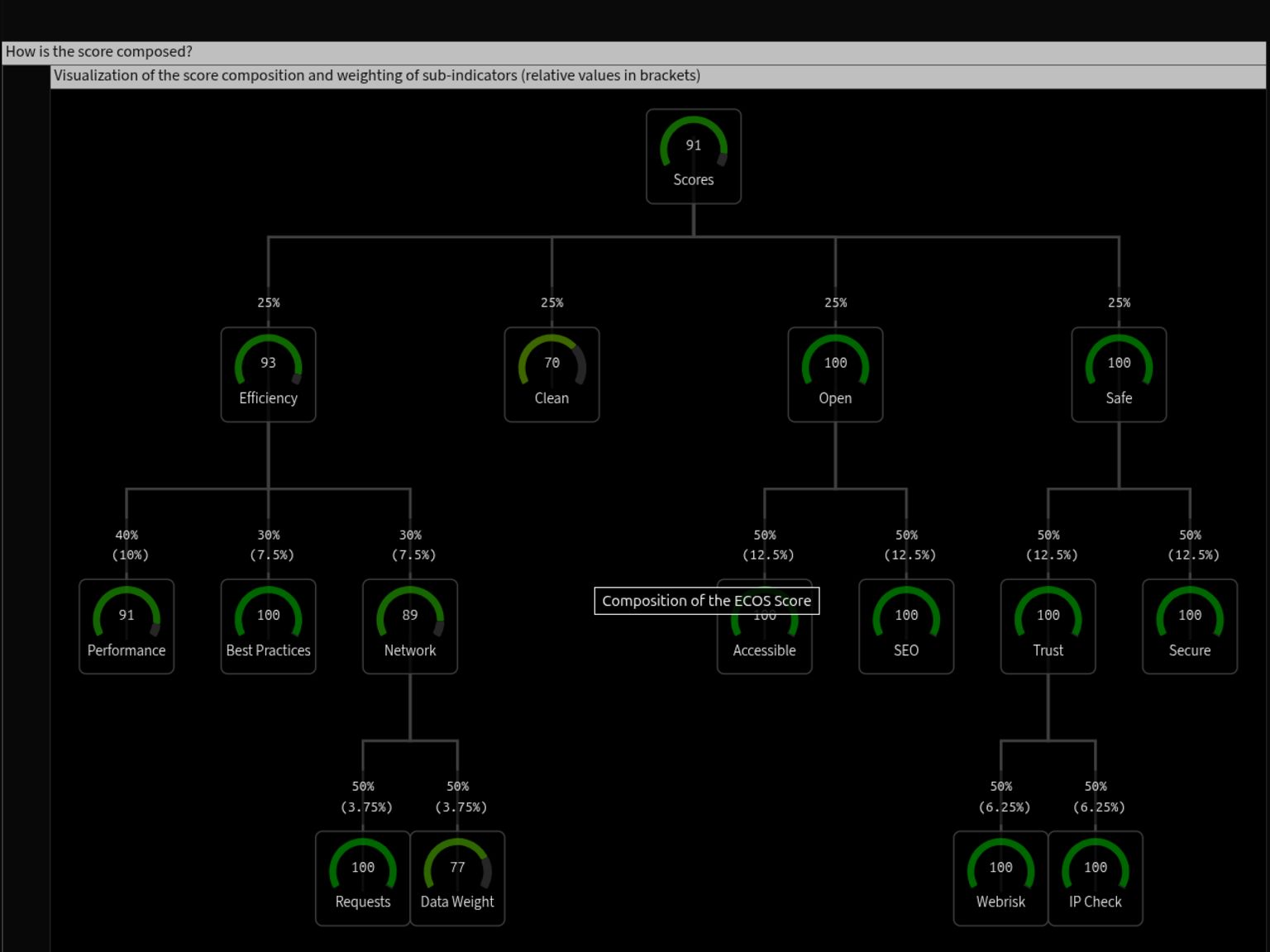
The audit is based on the ECOS indicator, a composite index that aggregates technical metrics into four dimensions:
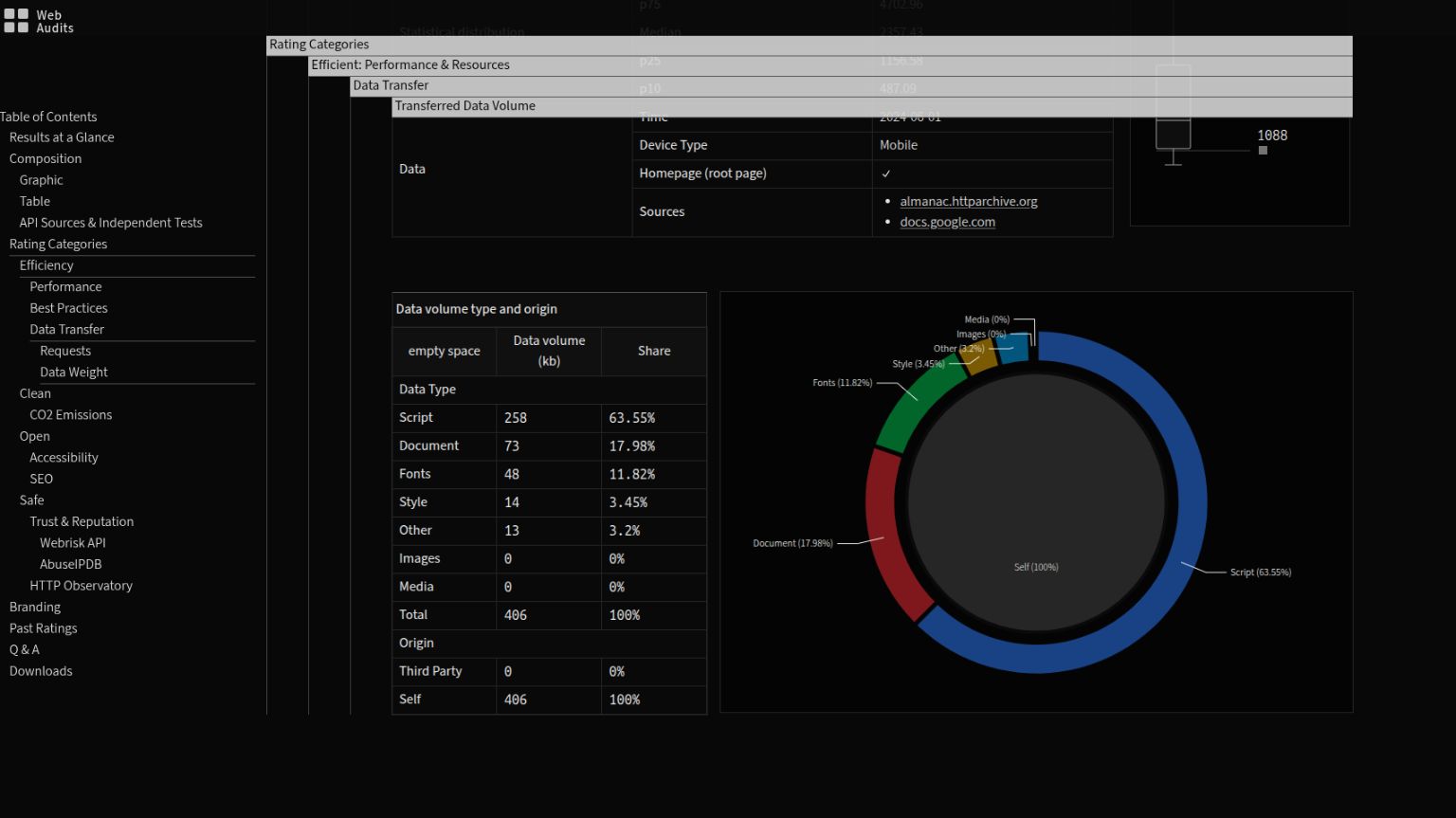
- Efficient: Measuring data volume, request overhead, and loading speed.
- Clean: Estimating the carbon footprint based on data transfer and hosting parameters.
- Open: Evaluating technical accessibility, adherence to open web standards, and SEO best practices.
- Safe: Analyzing infrastructure reputation (IP risk) and the implementation of security headers (CSP, HSTS).
AWS Services Used
The application is built on several interconnected AWS cloud services. Central services include:
- Lambda functions for server-side rendering of the React Router full-stack framework and as the computing unit for performing audits.
- DynamoDB, a managed NoSQL database, is used to store audit results.
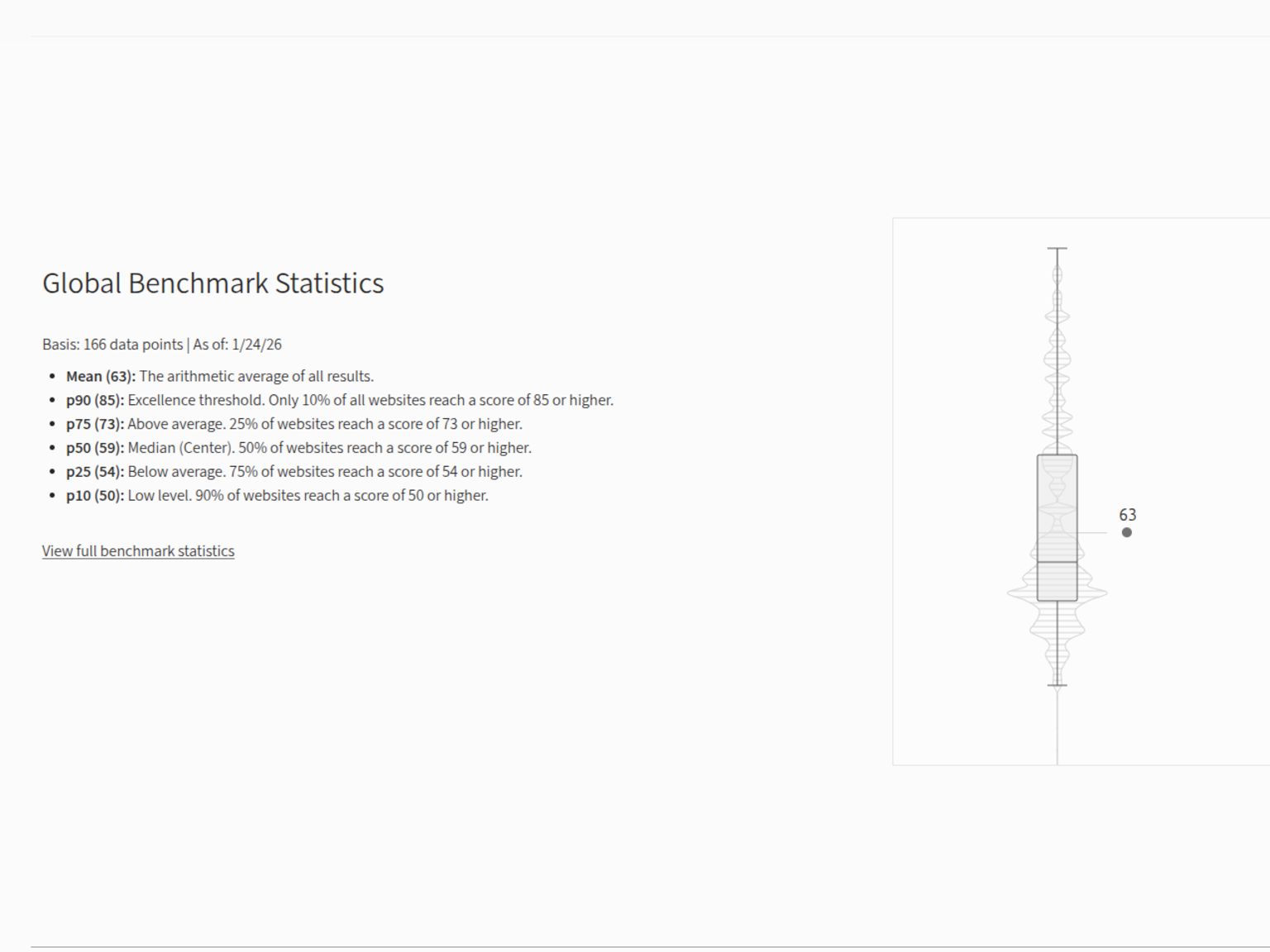
- EventBridge (Cron) manages daily backend processes. These calculate descriptive statistics (percentiles and means) across the entire dataset and dynamically regenerate XML sitemaps.
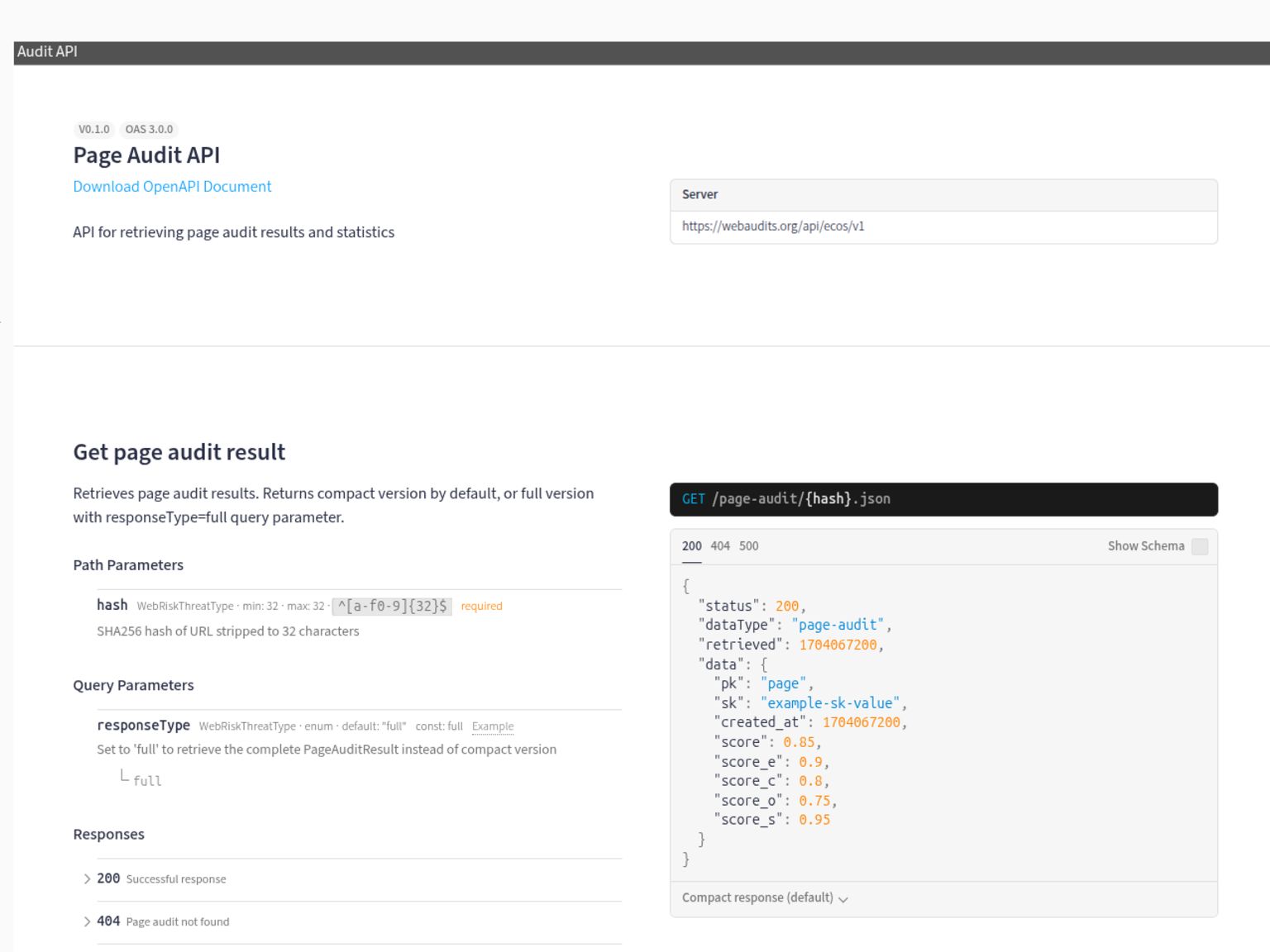
- CloudFront for hosting the web app and the REST API used to query audits and data.
Open Source and Open Data
Performing audits and querying data is free of charge. To manage operational costs, the number of new audits is limited to 3,000 per day during the initial phase.
The project's code is available on GitHub and licensed under Apache 2.0.
Tech Stack
- React Frontend
- React Router Full-stack framework for SSR, routing, and tooling
- AWS Cloud services for hosting, computing, and data storage
- SST Framework for configuring and deploying AWS services
- Code on GitHub